
Priebe: COVID ‘systemic insurance loss’
Guy Carpenter boss sees uncertainty reducing ahead of January renewals.
Guy Carpenter Chairman David Priebe
said the insurance industry is “grappling with the consequences of the first global, systemic insurance loss” in COVID-19. Speaking at a virtual media briefing, he said: “mid-year renewals were the epicentre of market uncertainty” but added that some of that doubt is now diminishing. “Primary pricing is increasing, and new capital is entering the market. The news isn’t all that bad.”
Global commercial insurance prices rose 19% in the second quarter – the 11th quarter in a row that prices have gone up, according to Marsh research – while more market commentators were lowering their forecasts of the potential final COVID-19 bill. Re/insurers have raised $28bn in new capital and “more may come," Priebe added.
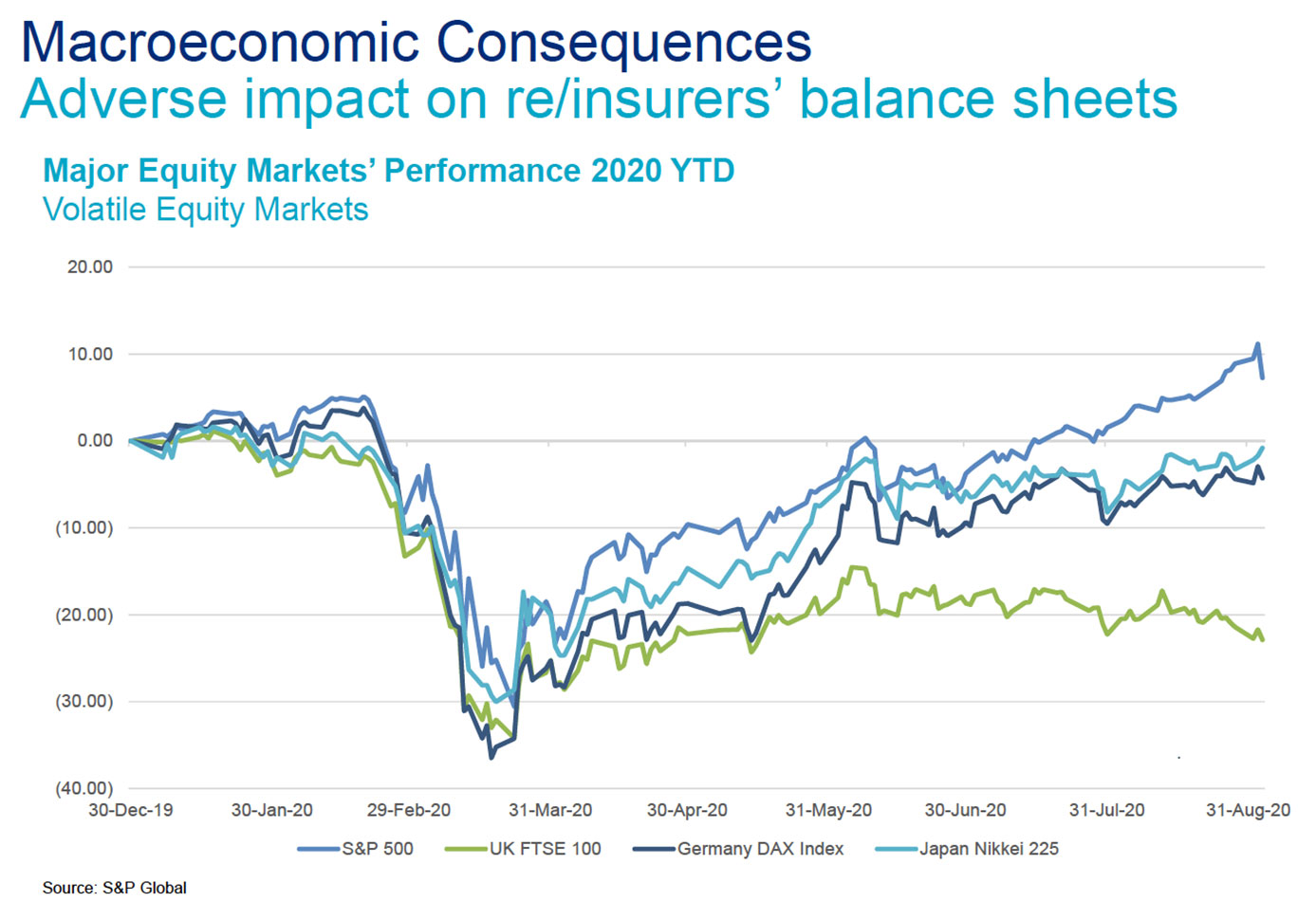
Priebe expects to see “a responsive marketplace at Jan. 1, with some pricing pressure driven by the cost of capital increase and pullback of capacity in certain areas.” However, he ruled out blanket price rises, saying: “we expect reinsurers will evaluate their approach to each client and portfolio on its own merit.”
The upcoming renewal negotiations would be longer and more complicated, meaning insurers will be under pressure to kick off talks earlier and provide more data, Priebe said: “We also expect more emphasis on reinsurer counterparty risk, and, for both insurer and reinsurer, a closer evaluation of the benefits of a mutual trading relationship.”
Cyber market stalled
The industry must innovate to ensure its “long-term relevance,” with 90% of the S&P 500’s market value now being in intangible capital, Priebe argued. Yet the market for its biggest growth product in recent years – cyber insurance – is showing “some growing pains,” said Erica Davis, a Managing Director at Guy Carpenter.
Cybercrime is forecast to cost $6trn a year by 2021, but the cyber insurance market is worth only $6bn and its growth has stalled, which Davis said is “directly at odds with a heightened threat environment and the increased valuation of intangible assets. And, it is creating a widening protection gap for businesses that will only expand.”
Worries about rising losses – cyber’s loss ratio jumped to 47% in 2019, from 34% the previous year – quantifying fast-changing exposures, and aggregations have stymied the cyber insurance market’s growth. COVID-19 hasn’t created any new risks, Davis said, but “it has increased the attack surface and amplified exposures through changed ways of working, digital supply chains and movement of data.” The Internet of Things and increased connectivity has created “a dependency maze across businesses and their businesses partners” that has increased fears of a systemic market loss. “Our lessons from COVID validate that market concern,” Davis said.
The rising threat of ransomware threatens the market’s future, Davis warned. “It is an exposure game changer, materially threatening the profitability of this line of business,” she said, “blurring the line between attritional and catastrophic cyber loss.”
To create a “relevant and sustainable” cyber insurance market “means creating well-defined, forward-looking product options for intangible risk, driving adoption of those products and demanding innovation in the face of the morphing risk landscape,” Davis contended.
Alt capital hits choppy water
The alternative capital market is another sector that is experiencing turbulence. While the cat bond market is buoyant, with over $7bn in new bonds already issued this year, investors have pulled money out of the collateralised retrocession sector because of catastrophes, loss creep and trapped capital, said Shiv Kumar, President of GC Securities. This could have a disproportionate impact on reinsurers’ willingness to offer capacity in January, particularly as little of the new capital coming into the industry is flowing into the retro market, Kumar argued.
There is very little appetite for pandemic bonds, “because investors find pandemic losses to be highly correlated with the financial markets,” Kumar said. But, despite being roiled in the past 12 to 18 months, the alternative capital market will continue to grow in coming years, Kumar concluded. “The reinsurance sector provides diversification and yield, and both are in great demand by pension and sovereign wealth funds. We are already seeing the formation of new funds by highly credible management teams.”
