
Re/insurance speeds disaster recovery
New study also finds U.S. takes longer to recover than its peers.
Countries in which buying insurance is more common typically recover from disasters quicker, according to a new report from the Cambridge Centre for Risk Studies (CCRS). Re/insurance helps to improve the speed and quality of recovery from a natural catastrophe, the CCRS stated, utilising a database of 102 disasters.
Countries with high insurance penetration, such as those in Western Europe, Japan, Australia and South Korea, take an average of less than 12 months to recover from a catastrophe. Whereas, those with very low insurance penetration, such as Bangladesh, Haiti, Nepal and the Philippines, take more than four years.
Each percentage-point increase in a country’s insurance penetration – its non-life premium volume divided by its GDP – reduces recovery time by nearly 12 months, the report found.
However, the U.S. takes more than three years to recover from catastrophes – much longer than its peers. That’s because take-up of disaster insurance, particularly flood cover, remains low among the most at-risk communities, while the federal and local disaster response has been fragmented, said the report. The Federal Emergency Management Agency (FEMA) is overstretched, so there needs to be more private investment in risk management, while those who are vulnerable need to do more to prepare for disasters, the CCRS argued.
Re/insurance key to building disaster resilience
“The case for re/insurance is clear but is seldom adequately explained. … This report shows pre-disaster financing (predominantly re/insurance) with the ability to channel significant funds instantly and without recourse as the single biggest solution to catastrophic events,” said Jonathan Gale, Reinsurance Chief Underwriting Officer of AXA XL, which sponsored the report.
“Insurance plays a great role in incentivising those improvements,” said Oliver Carpenter, CCRS Climate Risk Lead. “Every $1 you spend before a disaster saves you $4 in losses. Insurance can help to lessen the loss when an event hits.”
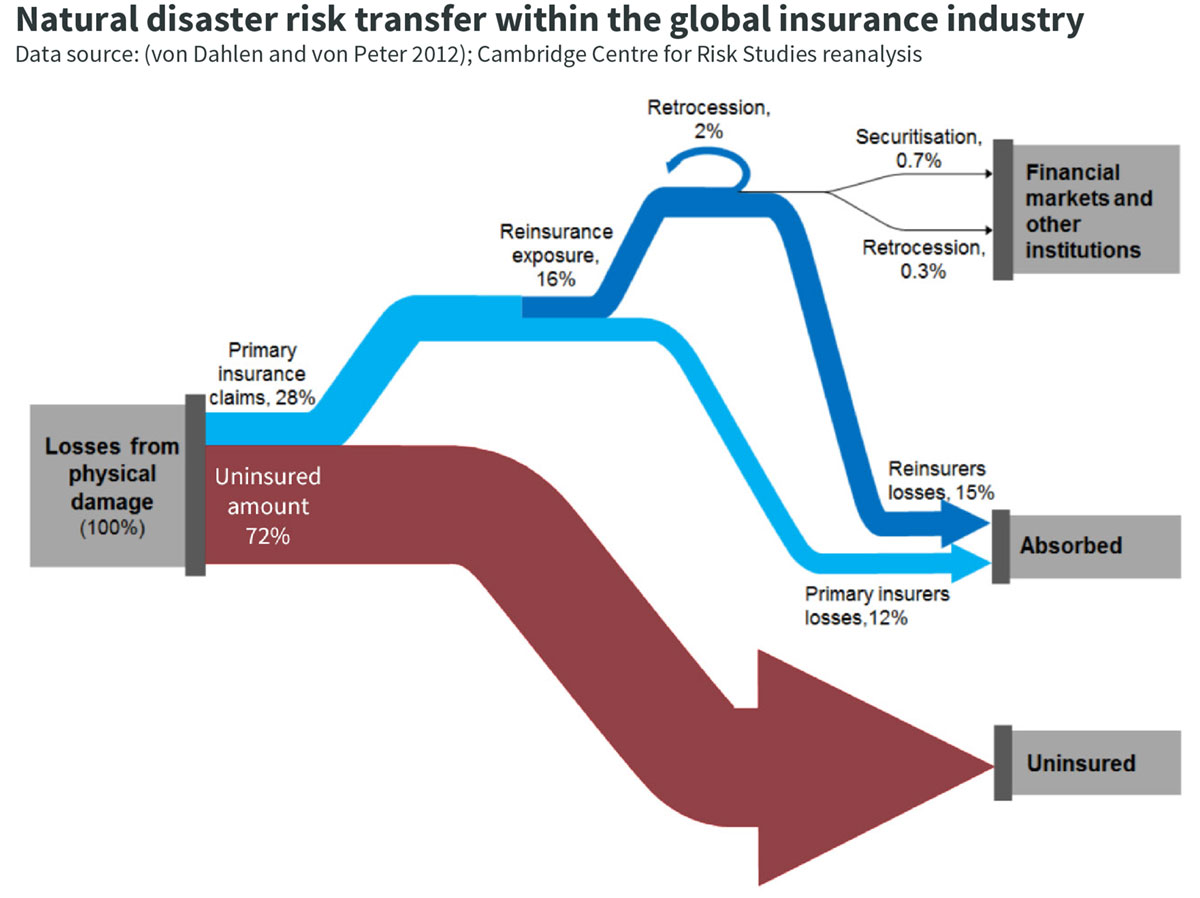
The average annual loss from natural disasters has skyrocketed over the past 40 years, the report notes, from
$27bn in the 1970s to nearly $200bn in the 2010s. The re/insurance industry picks up on average 28% of the
cost of a disaster, according to the report.
“That is an extremely effective measure for sharing and diversifying risk,” CCRS Chief Scientist
Andrew Coburn told a virtual media briefing. The remainder of the bill has to be paid by the local communities – although some never fully recover from the shattering economic and social cost of this “protection gap.”
“Our study is trying to draw attention to that protection gap, to try to close that, and reduce the impact of catastrophes in the future,” Coburn
added.
Simon Challis is an editorial contributor to Reactions
